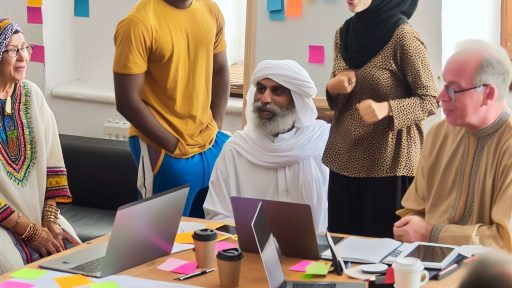




Overview of Nigeria’s Unemployment Crisis
Current State of Unemployment
Nigeria faces a persistent and growing unemployment problem.
The national unemployment rate exceeds 30 percent, according to the National Bureau of Statistics.
This situation severely impacts millions of young Nigerians seeking work.
Consequently, many graduates remain jobless for extended periods.
The challenge poses significant threats to economic stability and social cohesion.
Underlying Causes of Unemployment
Economic Factors
Nigeria’s economy depends heavily on oil exports, causing volatility.
Fluctuations in oil prices have led to recessions that affect job creation.
Additionally, insufficient industrial diversification limits employment opportunities.
Many small and medium businesses struggle due to limited access to capital.
These economic issues hamper the growth of a robust job market.
Demographic and Educational Factors
Nigeria has a rapidly growing population with a large youth demographic.
Yet, the education system often lacks practical skills training.
Graduates frequently enter the market without job-ready competencies.
Furthermore, there is a mismatch between available jobs and workers’ skills.
This gap contributes significantly to the high unemployment rate.
Structural and Institutional Challenges
Corruption and bureaucratic inefficiencies reduce business incentives.
Regulatory hurdles discourage entrepreneurship and private sector growth.
Infrastructure deficits increase costs and limit economic activities.
Moreover, political instability undermines long-term planning and investment.
Such challenges restrict job creation and economic diversification.
How freelancing offers flexible job opportunities for Nigerian youths
Access to diverse career paths
Freelancing opens doors to many career options beyond traditional roles.
Young Nigerians can explore fields like graphic design.
They can also work in writing and programming.
Additionally, skills such as digital marketing have high demand.
Web development is another in-demand skill area.
These opportunities help youths leverage their talents in varied industries.
For example, Tunde Okoro, a Lagos-based freelancer, thrives as a content strategist.
Flexibility in work hours and locations
Freelancers choose when and where to work according to their preferences.
This flexibility suits youths juggling education or family commitments.
Moreover, remote work removes the need for commuting.
It also saves time and money for freelancers.
Lilian Eze works from Enugu while managing projects for international clients.
Such freedom improves productivity and job satisfaction among freelancers.
Encouraging entrepreneurial spirit
Freelancing nurtures an entrepreneurial mindset among Nigerian youths.
Youths learn how to market themselves effectively.
They also manage client relationships with skill.
Furthermore, many create personal brands to stand out in competitive markets.
At times, they form small agencies like Kelechi Ade’s creative group in Abuja.
This growth sparks innovation and builds valuable business skills early on.
Improved income potential
Freelancing allows young talents to earn based on their skills and efforts.
They can increase income by taking multiple projects.
Specializing in niches also boosts earning potential.
Additionally, connecting with international clients often offers higher pay rates.
For instance, Adeola Balogun earns more freelancing online than in traditional roles.
Hence, freelancing helps many youths improve their financial independence.
Building a sustainable career in the digital age
The digital economy increasingly favors flexible, online work models.
Consequently, freelancing equips youths with relevant skills for future job markets.
Youths gain experience using current technologies and communication tools daily.
Moreover, freelancers like Emeka Nwosu provide training to uplift others locally.
This trend contributes to a more resilient and adaptable Nigerian workforce.
The Role of Digital Platforms in Connecting Nigerian Freelancers to Global Markets
Expanding Opportunities Beyond Borders
Digital platforms open doors for Nigerian freelancers to access global marketplaces.
They break down geographic barriers and connect talent with clients worldwide.
These platforms also provide opportunities for diverse projects in various industries.
Thus, freelancers like Chinedu Okeke and Amaka Obi can showcase their skills internationally.
Consequently, this expands income potential beyond local economic constraints.
Popular Platforms Empowering Nigerian Freelancers
Sites such as TuringHub, GlobalTask, and BrightWork attract clients seeking quality freelancers.
These platforms offer user-friendly interfaces to create profiles and bid on jobs.
Additionally, they provide secure payment systems that build trust for both parties.
For example, Miriam Ijeoma successfully completed several graphic design projects via TuringHub.
Likewise, Uche Nwosu found long-term clients on GlobalTask for software development work.
Skills Development and Reputation Building
Digital platforms encourage continuous learning to meet global standards.
Freelancers receive feedback and ratings that enhance their professional reputation.
Hence, many Nigerians improve communication, technical, and project management skills.
Moreover, success stories of Adewale Ayodeji and Ifeoma Eze inspire emerging freelancers.
Consequently, more Nigerians build competitive profiles that attract international clients.
Challenges and Support Systems
Despite benefits, challenges like internet reliability and payment delays persist.
However, organizations such as Freelance Connect Nigeria provide training and advocacy.
Also, platforms continuously improve services to address local freelancer needs.
Therefore, combined efforts strengthen Nigeria’s presence in the global freelancing economy.
Economic Contributions of Digital Freelancing
Digital platforms increase foreign exchange inflows through global client payments.
They also reduce unemployment by creating flexible work opportunities for millions.
Additionally, freelancing boosts entrepreneurship as Nigerians launch digital agencies.
For instance, Tunde Ajayi expanded his content creation service to international markets.
Thus, digital platforms play a vital role in transforming Nigeria’s employment landscape.
Uncover the Details: The Influence of Global Trends on Nigerian Freelancing Practices
Benefits of Freelancing in Fostering Entrepreneurial Skills and Self-Reliance
Encouraging Entrepreneurial Mindsets
Freelancing pushes individuals to think creatively and solve problems independently.
It motivates professionals like Chima Okeke to explore new market opportunities.
Consequently, freelancers develop a strong sense of initiative and innovation.
These skills are essential for successful entrepreneurship in today’s economy.
Moreover, freelancers often learn marketing, client negotiation, and financial management.
These experiences build a solid foundation for launching small businesses.
Building Self-Reliance Through Diverse Skill Sets
Freelancers acquire diverse skills across multiple fields such as design, writing, and coding.
For instance, fashion designer Ifeanyi Nwosu expanded his brand through freelancing projects.
Such versatility reduces dependence on a single employer or industry.
As a result, freelancers become more adaptable to changing economic conditions.
Additionally, managing projects independently increases confidence and decision-making abilities.
This self-reliance empowers professionals to take control of their careers.
Financial Independence and Flexibility
Freelancing offers direct access to income without intermediaries.
Therefore, individuals like Amina Suleiman can earn based on their efforts and skills.
This financial control nurtures better money management and investment habits.
Furthermore, freelancing allows flexible working hours, promoting work-life balance.
Such flexibility encourages long-term commitment and sustainable career growth.
Thus, freelancers gradually reduce dependence on unstable traditional job markets.
Networking and Exposure to Global Opportunities
Freelancers connect with diverse clients worldwide through platforms like KonektHub.
This exposure fosters cultural awareness and broadens professional perspectives.
Moreover, networking enhances collaboration skills crucial to entrepreneurship.
It also opens doors to mentorship and partnerships beyond local boundaries.
Ultimately, these interactions accelerate personal and business development.
Role of Freelancing in Employment Creation and Economic Growth
Successful freelancers often start their own agencies or consultancies.
For example, tech consultant Emeka Umeh founded a digital marketing firm employing others.
This cycle promotes job creation and stimulates local economies.
Therefore, freelancing serves as a catalyst for wider economic empowerment in Nigeria.
It reduces unemployment by transforming job seekers into job creators.
Discover More: The Future of Freelancing in Nigeria: Opportunities and Challenges
Challenges Nigerian Graduates Face with Traditional Employment
High Competition for Limited Job Openings
Nigerian graduates encounter fierce competition for scarce job vacancies.
Many qualified candidates apply for the same positions simultaneously.
Consequently, this increases the difficulty of securing stable employment.
Moreover, employers often favor candidates with additional experience over fresh graduates.
Mismatch Between Skills and Job Market Demands
Graduates frequently possess skills that do not align with employers’ needs.
Universities sometimes fail to update curricula to meet modern industry standards.
Therefore, new graduates struggle to demonstrate practical skills during recruitment.
As a result, many job seekers remain unemployed despite their educational qualifications.
Lengthy and Inefficient Recruitment Processes
Traditional employment requires multiple stages, including screenings and interviews.
These procedures often take months to complete without guaranteed outcomes.
Furthermore, some recruitment platforms lack transparency and professionalism.
Consequently, candidates become discouraged and lose motivation to continue applying.
Limited Opportunities for Entrepreneurship and Innovation
Conventional job roles rarely encourage creativity or independent problem-solving.
Graduates may feel constrained by rigid organizational structures and policies.
Thus, many talented individuals fail to explore alternative income sources actively.
In contrast, freelancing offers a more flexible environment to express innovations.
Lack of Access to Professional Networks
New graduates often struggle to connect with industry professionals.
Networking events and mentorship programs remain inaccessible to many.
This lack of connections hinders access to hidden job opportunities.
Therefore, traditional employment pathways frequently limit career advancement potential.
Uncover the Details: The Evolution of Freelancing in Nigeria and What’s Next
Case Studies of Successful Nigerian Freelancers and Their Impact on the Economy
Emerging Leaders in Freelance Tech
Tolani Adesanya established herself as a leading software developer on freelance platforms.
She leveraged her skills to work with international clients consistently.
Her income supports not only her family but also local tech training initiatives.
Consequently, she mentors young Nigerians eager to enter the freelancing space.
Tolani’s success demonstrates how digital skills can transform personal and communal economies.
Creative Industry Freelancers Shaping Nigeria’s Economy
Chinedu Okeke has built a reputation as a freelance graphic designer with a global clientele.
His work includes branding for startups in Lagos as well as companies in Europe and America.
Moreover, Chinedu invests part of his earnings in workshops to train aspiring designers.
Such efforts help grow Nigeria’s creative industry and create more freelance opportunities.
Freelance Writers Boosting Content Creation and Business Growth
Efe Amadi specializes in content writing for tech companies and marketing agencies worldwide.
Her consistent quality has led to long-term contracts and referrals.
Efe actively participates in online forums, helping others improve their writing skills.
This community-building fosters a stronger freelance writing ecosystem in Nigeria.
Economic Contributions of Nigerian Freelancers
Successful freelancers like Tolani, Chinedu, and Efe contribute significantly to economic growth.
They generate foreign exchange by working with international clients directly.
In addition, freelancers reduce unemployment and alleviate pressure on the traditional job market.
Through skill sharing and mentorship, they build capacity within local communities.
Therefore, freelancing serves as a realistic pathway to economic empowerment across Nigeria.
Key Factors Driving Freelance Success
- Access to reliable internet and digital tools
- Continuous skills development and adaptation
- Strong personal branding and networking online
- Passion for self-improvement and client satisfaction
Delve into the Subject: The Role of Community Support in Nigerian Freelancing Success

Government Policies and Initiatives to Support Freelancing Growth in Nigeria
Creating an Enabling Legal Framework
The Nigerian government actively develops policies tailored to freelance workers.
These policies aim to protect freelancers' rights and encourage fair labor practices.
Recently, the Ministry of Labour and Employment introduced guidelines for gig and freelance work.
Consequently, these efforts enhance the legitimacy of freelancing as a career option.
Additionally, the government fosters dialogue between freelancers, platforms, and regulators.
Training and Capacity-Building Programs
Federal and state agencies collaborate to provide skills training for aspiring freelancers.
One initiative, the TechHustle Project, offers digital marketing and coding workshops nationwide.
Furthermore, these programs include mentorship from experienced freelancers like Samson Ajayi.
As a result, many young Nigerians gain in-demand freelance skills to compete globally.
The government also partners with companies such as DigitalWorks Solutions to deliver online courses.
Financial Support and Incentives
The Central Bank of Nigeria launched the Freelance Empowerment Fund to provide low-interest loans.
This fund enables freelancers to purchase equipment and improve their service delivery.
Moreover, tax incentives are under review to lessen the burden on freelance incomes.
For instance, the Lagos State Government offers startup grants that freelancers can access.
Such financial backing stimulates growth and sustains freelancing careers across the country.
Expanding Digital Infrastructure
The Nigerian Communications Commission prioritizes expanding broadband access nationwide.
Improved internet connectivity is crucial for freelance professionals to reach global clients.
Plans to increase data affordability also reduce barriers to online freelance work.
Private firms like TelNova Communications cooperate with government agencies on these projects.
Thus, Nigeria advances toward becoming a hub for digital freelance services.
Collaborations with Freelance Platforms and Industry Stakeholders
The government supports partnerships between local freelance platforms such as TaskHive and regulators.
These collaborations aim to create standardized contracts and dispute resolution mechanisms.
Additionally, workshops with firms like Alatini Tech promote ethical freelance practices.
Consequently, trust increases between clients and freelancers within the Nigerian market.
Such initiatives strengthen the entire freelance ecosystem for sustainable development.
Freelancing as a Solution to Brain Drain and Talent Retention in Nigeria
Addressing Brain Drain through Remote Opportunities
Nigeria faces significant brain drain.
Many skilled workers seek jobs abroad.
Fortunately, freelancing offers remote work.
It allows talent to stay and earn locally.
Companies like Lagos Digital Collective connect Nigerian freelancers with international clients.
Consequently, talented professionals like Chinedu Eze choose freelancing over relocation.
This trend reduces the incentives for permanent migration outside Nigeria.
Moreover, remote work creates flexible opportunities.
It matches diverse skill sets effectively.
Enhancing Talent Retention with Freelance Ecosystems
Robust freelance platforms enable Nigerian startups to tap local expertise effectively.
For example, tech firm Nebula Solutions hires freelancers for app development projects.
Such practices give professionals a reason to contribute locally.
They can earn competitively while working from Nigeria.
Notably, freelancing builds a sense of community among Nigerian knowledge workers.
Freelancers like Ifeoma Chukwu share skills and mentor peers.
They also foster innovation networks within the country.
Additionally, platforms like NaijaFreelanceHub provide training to upgrade freelance skills.
These ecosystems help retain talent by offering continuous learning and growth.
Economic Impact of Retaining Talent through Freelancing
When skilled professionals remain in Nigeria, the local economy experiences growth.
Increased freelance income boosts consumer spending.
It also raises tax revenue for the government.
Furthermore, businesses gain access to a wider talent pool without relocation costs.
Consequently, companies such as GreenWave Media expand projects by hiring freelance marketers.
Government initiatives supporting freelancing further promote talent retention nationwide.
Thus, freelancing creates a sustainable solution to brain drain and unemployment.
The Potential of Freelancing to Diversify Nigeria’s Economy Beyond Oil
Expanding Economic Opportunities through Freelance Work
Nigeria’s heavy reliance on oil has exposed the economy to global market fluctuations.
Consequently, the need to diversify income sources has become urgent.
Freelancing offers an effective way to expand economic opportunities.
It allows individuals to leverage skills across various digital fields.
Moreover, freelancing creates pathways beyond the traditional oil sector.
This shift can stimulate growth in creative, tech, and service industries nationwide.
Also, many local startups and companies seek freelance talent for flexible project needs.
Building a Resilient Economy with Digital Skills
Digital skills empower Nigeria’s youth to participate in the global marketplace.
As a result, freelancing helps cultivate a versatile workforce.
Young professionals like Amaka Obi and Emeka Nwosu succeed in web development and design.
In addition, freelancing promotes innovation and entrepreneurship among Nigerians.
These skills reduce dependency on non-renewable resources such as oil.
Therefore, investing in digital education programs is essential for long-term resilience.
Encouraging Inclusive Growth through Freelance Platforms
Freelance platforms such as TechLancer Africa and NaijaFreelance connect talent with clients worldwide.
They provide equal opportunities for individuals from diverse backgrounds.
Consequently, rural and urban communities benefit from new sources of income.
For instance, Adeola Ajayi from Ibadan thrives as a freelance content writer.
Also, platforms reduce barriers to entry by simplifying payment and client communication.
This inclusivity drives sustainable economic development across different regions.
Government and Private Sector Roles in Supporting Freelancing Growth
The Nigerian government can boost freelancing through policy support and infrastructure development.
Improving internet access nationwide remains a top priority.
Private companies like Sterling IT and Umoja Digital also invest in freelancer training.
Additionally, partnerships between public and private sectors expand freelancing ecosystems.
This collaboration ensures freelancers receive mentorship and fair compensation.
In turn, the diversified economy will become more adaptive and competitive globally.
Key Benefits of Diversifying the Economy through Freelancing
- Creates new income streams outside oil revenues
- Empowers youth with digital and entrepreneurial skills
- Encourages innovation across multiple sectors
- Promotes regional economic inclusion
- Builds economic resilience against global shocks
- Facilitates global networking and market access
Steps Nigerians Can Take to Get Started and Thrive in the Freelance Ecosystem
Building Relevant Skills
Start by identifying marketable skills in demand globally and locally.
Focus on digital skills like graphic design, web development, or content writing.
Enroll in affordable online courses offered by platforms like Coursera, Udemy, or Alison.
Practice consistently to improve your expertise and build a solid portfolio.
Join Nigerian tech hubs, such as CcHub Lagos, for mentorship and practical exposure.
Creating a Strong Online Presence
Register on popular freelancing platforms like Upwork, Fiverr, and Toptal to find clients.
Develop a professional profile that highlights your skills, experience, and accomplishments.
Use platforms such as LinkedIn to network with potential clients and industry peers.
Consistently update your portfolio with samples of completed projects and client testimonials.
Consider building a personal website to showcase your brand and services uniquely.
Navigating the Freelance Marketplace
Research client needs carefully before submitting proposals or bids.
Write personalized, clear, and concise proposals that address clients’ specific goals.
Set competitive and fair rates reflecting your skill level and market standards.
Maintain excellent communication with clients to build trust and long-term relationships.
Deliver projects on time and exceed expectations to encourage repeat business.
Managing Finances and Legalities
Open a dedicated bank account or digital wallet for your freelance earnings.
Use invoicing tools like Payoneer or Flutterwave to simplify payment collection.
Understand tax obligations related to freelancing and consult professionals if necessary.
Register your freelance business with Nigerian corporate bodies for legitimacy.
Invest in basic legal knowledge to draft simple contracts protecting your work.
Continuous Improvement and Networking
Stay updated on freelancing trends by following industry blogs and attending webinars.
Join Nigerian freelance communities such as Freelancers Nigeria or Lagos Freelancers Meetup.
Seek feedback regularly to improve your service quality and client satisfaction.
Participate in hackathons, contests, or collaborative projects to expand your experience.
Build relationships with successful freelancers like Tunde Afolayan and Amaechi Okoye for inspiration and guidance.
Additional Resources
Microsoft launches initiative to help 25 million people worldwide …