






Use Nigeria inflation freelance rates as a prompt to check three things: the national price figures, your own delivery inputs and the work promised in the quote. The annual inflation rate slowed in October. Your own cost record and scope will tell you more about whether a particular quote needs to change.
The National Bureau of Statistics catalogue dates the October release to 16 November 2026. Its report and workbook give annual headline inflation of 14.06% in October and 14.63% in September. October’s monthly headline increase was 0.43%. The national measure covers a consumer basket across Nigeria.
Nigeria inflation freelance rates start with the comparison period
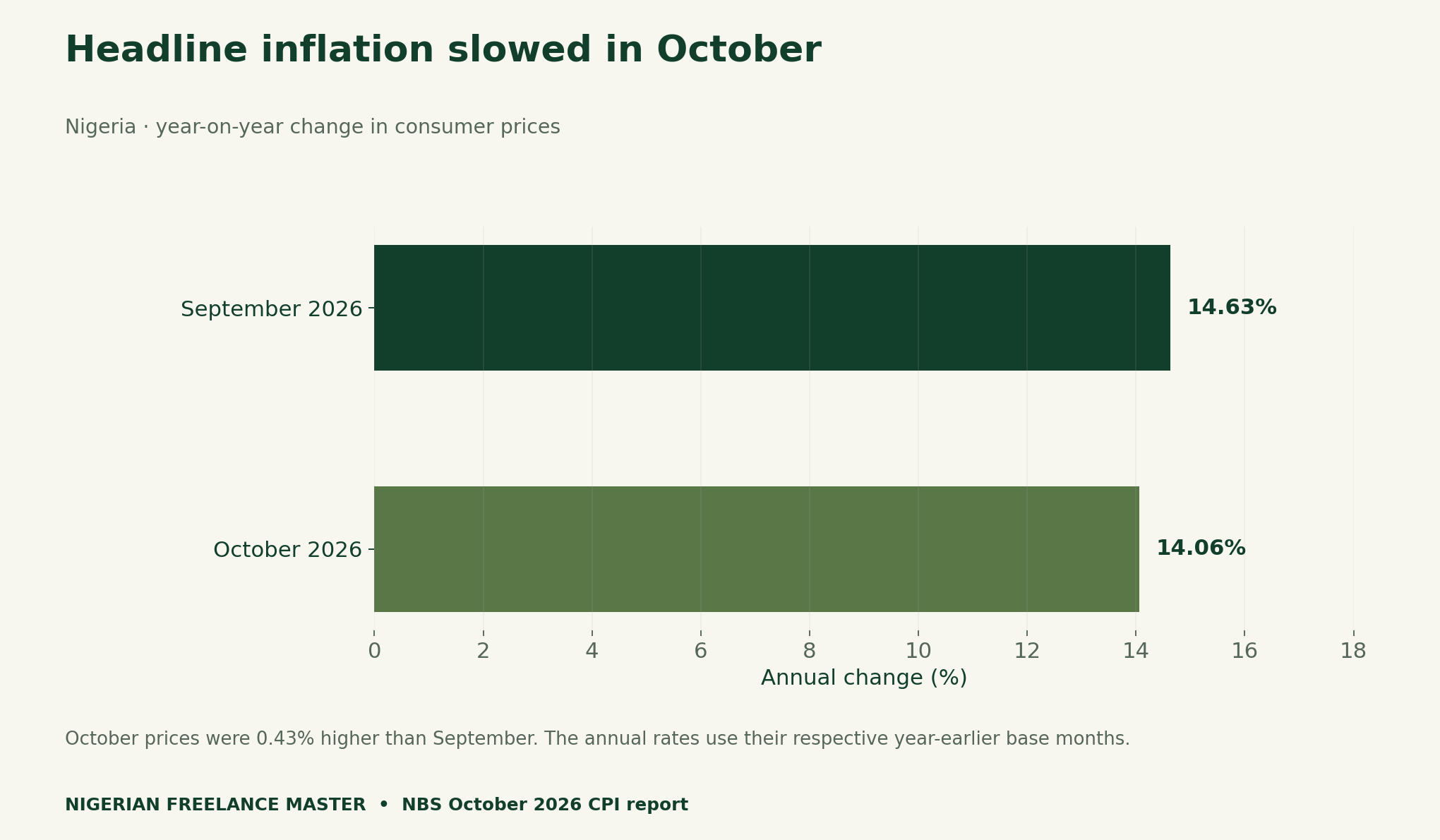
First, subtract the reported annual levels: 14.06 minus 14.63 equals −0.57 percentage points. Each annual rate uses its own year-earlier month. Next, look at the separate monthly result. The index rose about 0.43% between September and October. That is disinflation in the annual comparison alongside a monthly rise in the price level.
The report’s displayed monthly rates for September and October are 0.06% and 0.43%. Their difference from the rounded values is 0.37 percentage points, while the report text says 0.38. We use the published levels and show the subtraction explicitly. The workbook’s unrounded September and October index levels also reproduce the October monthly result to two decimal places.
Compare inputs for the same deliverable
Take a fictional monthly editing package with the same number of pages, revision rounds and delivery window. The supplier bills for connectivity and backup power rise by ₦1,000 and ₦3,000. The other allocated costs stay flat. Therefore the package’s illustrative inputs increase from ₦80,000 to ₦84,000, or 5%. This arithmetic uses the same quantities in both periods.
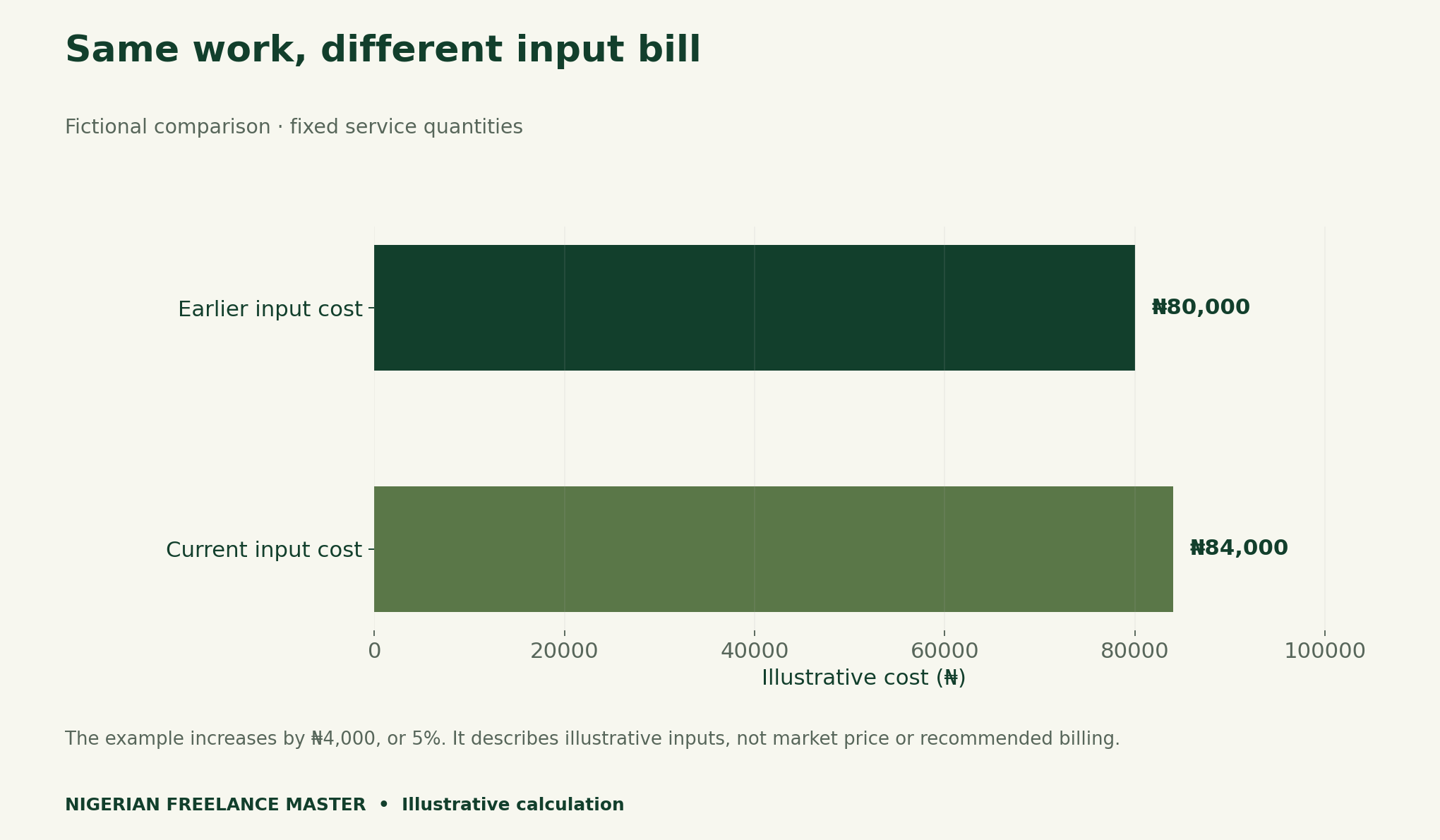
Use the same test on your actual quote. Log the source and date of each earlier and current input. Allocate shared costs on a stated basis. Also record the time you spend on revisions, calls and follow-up. If a newer quote includes more work, separate that scope change before comparing it with your old price.
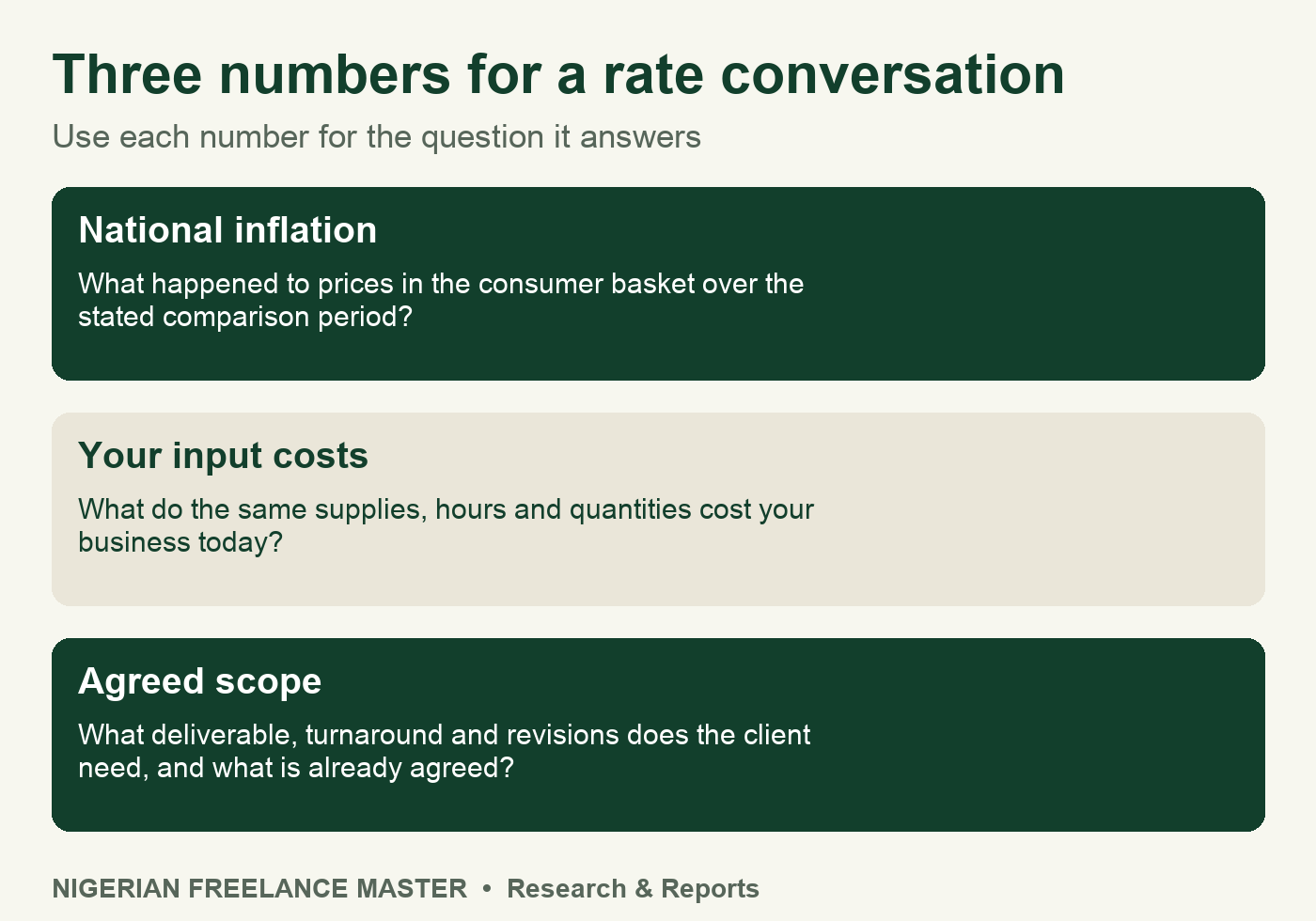
Discuss scope before agreeing a new rate
If a client asks you to cut the fee, confirm the outcome they need. Then compare the existing scope and one smaller option. For example, a reduced package might cover four edited pages and one revision round, with the remaining pages quoted separately. Put each scope, fee and delivery date in writing. Check existing terms before suggesting a change to work already agreed.
You can say, “The annual consumer inflation rate slowed. I’ve compared the same service and delivery window for this quote. Here are the existing scope and a smaller option.” For more on fixed project and hourly fee structures, see our guide to pricing freelance projects in Nigeria.
Methods and downloads
The NBS source table preserves the comparison period for every rate. The cost example is entirely invented. Keep your real internal figures in your own register, and share only the cost or scope evidence needed for a specific discussion.