






A phased freelance proposal gives a client one useful outcome now and a clear decision about what comes next. For example, offer a paid audit of three pages before quoting separately for rewrites. The client keeps an actionable audit even if the project stops after that stage.
The Bank of America Business Owner Report release on 17 November 2026 says 91% of surveyed US business owners reported higher costs. Meanwhile, 58% expected revenue to increase and 49% planned to expand. The questions cover different periods and goals. They illustrate why a buyer might be cautious about the first commitment while still considering expansion.
A phased freelance proposal starts with a useful outcome
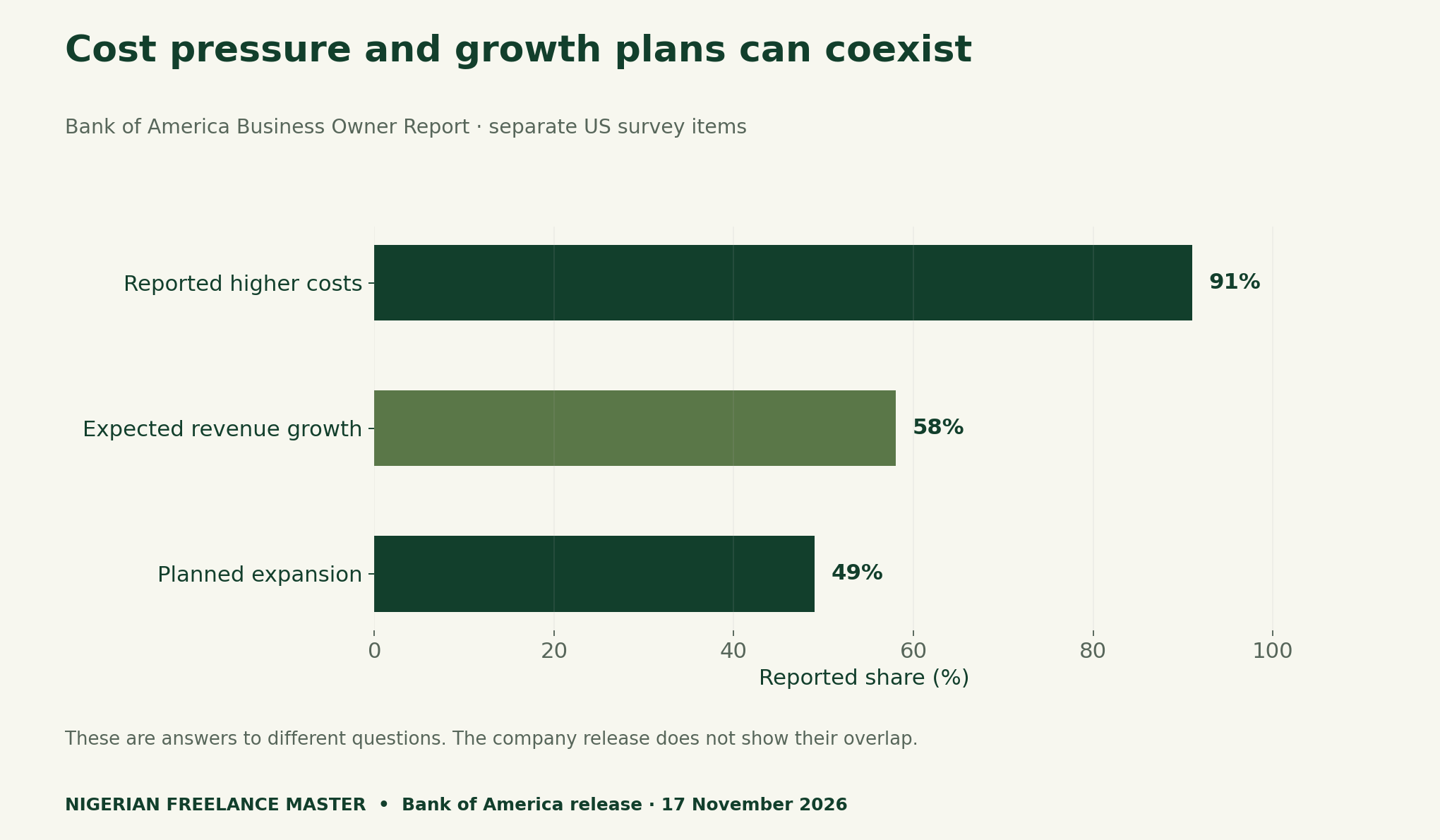
Ipsos surveyed 849 small and 250 medium-sized US business owners in August. The release describes weighting for size, revenue and region. It does not measure Nigerian budgets or test whether staged proposals win more work. Use it for context, then ask the buyer to identify a real decision and the information they need to make it.
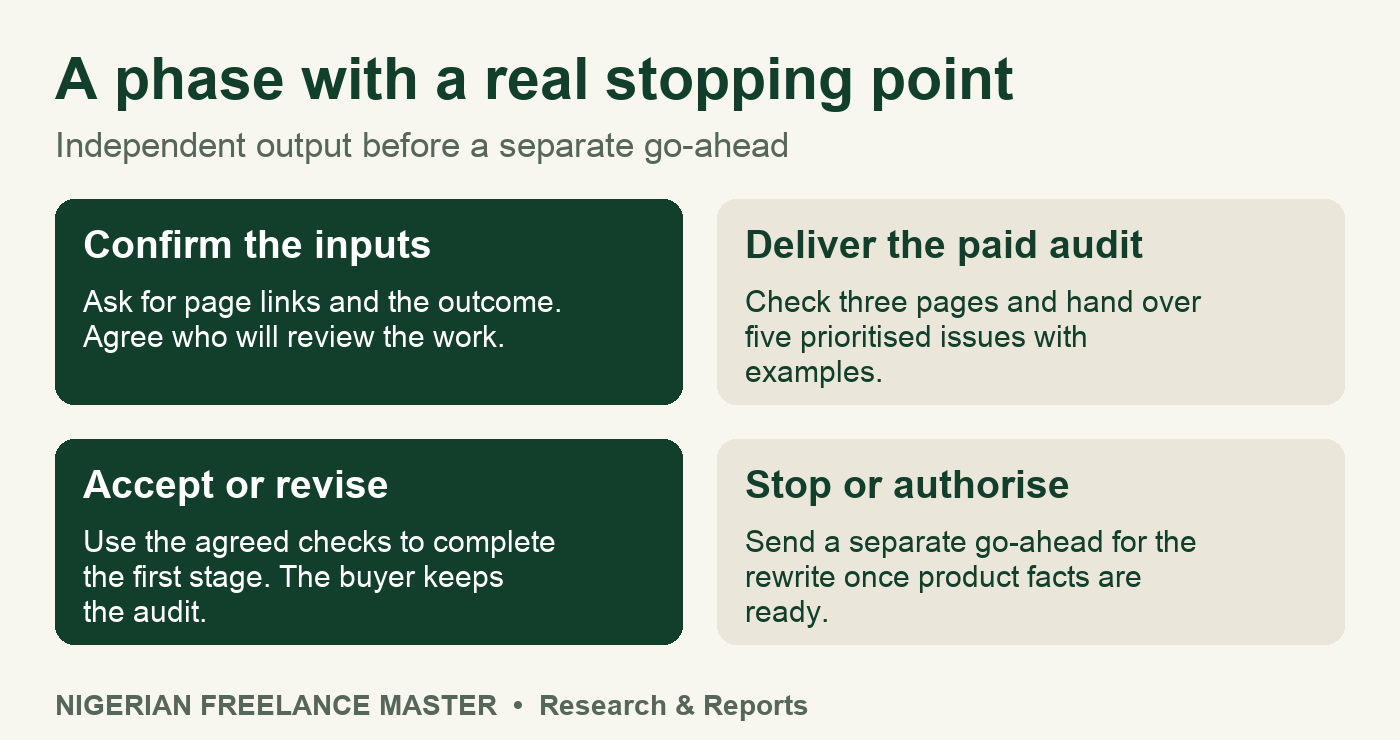
Start with one outcome the buyer can use independently. In the fictional example, the buyer gets a list of five prioritised issues across three product pages. Add a short explanation of the criterion used for each finding. The buyer can act on that document even if someone else does the rewrite.
Reduce the first commitment by reducing the scope
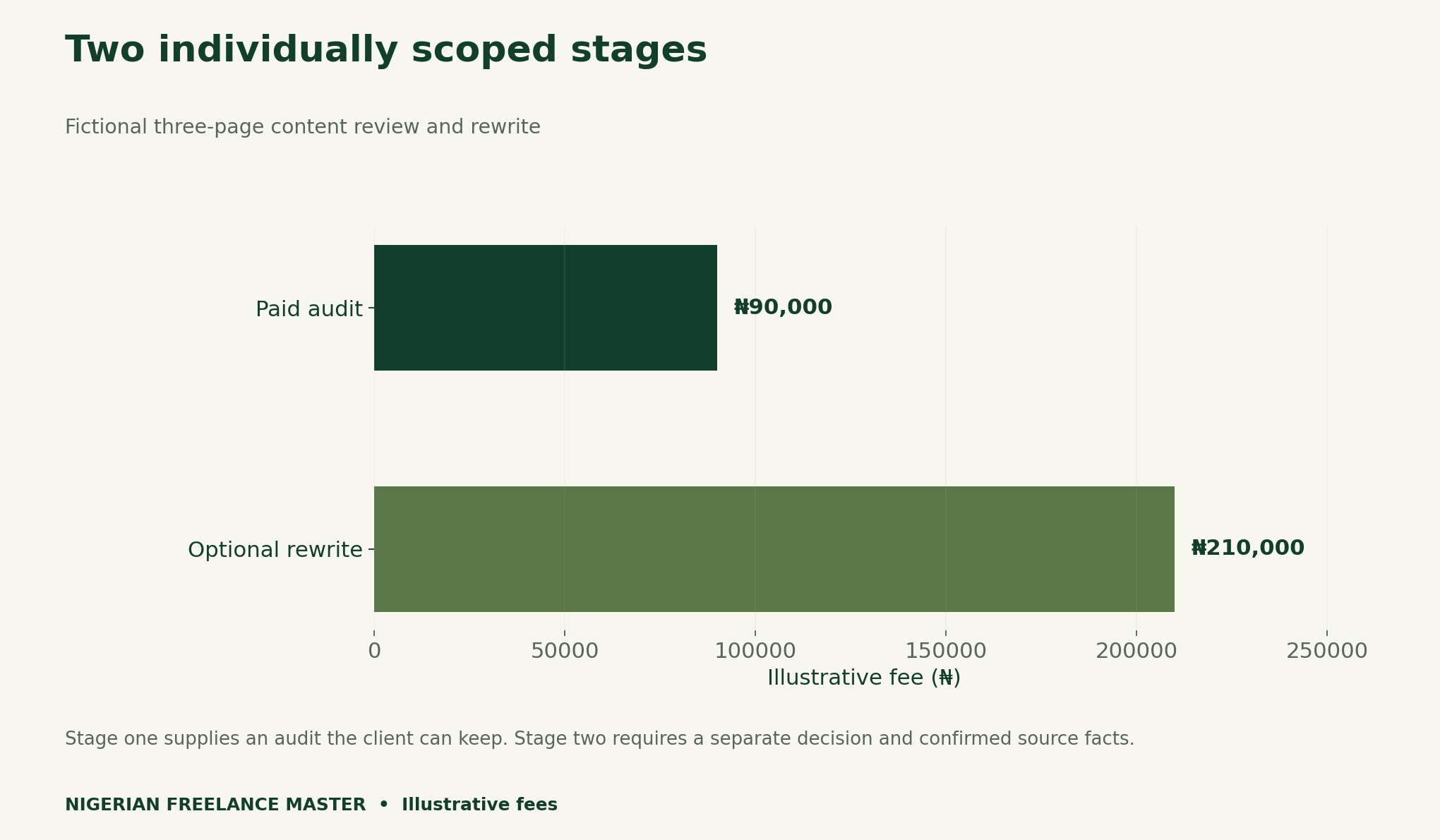
In this example, the first quote covers checks of three URLs and one clear findings document. It excludes rewriting, publication and analytics setup. The optional stage includes three rewritten drafts and one revision round. If the buyer orders both, the example budget totals ₦300,000. State currency, due dates and any applicable fees in a real quote.
Before you quote, ask for the pages, the commercial goal and who can approve the result. Those questions establish scope. A ranked audit, bespoke recommendations and sample rewrites take delivery time. Include that work in the paid stage when it forms part of the outcome.
Agree on acceptance before the first phase starts
Give the first phase an acceptance check the reviewer can apply. For this audit, each named URL should appear, every issue should have an example and the document should identify priority. Also agree how to handle a missing input. If a page is unavailable, record the exception and ask the reviewer whether a substitute belongs in scope.
At handoff, record one of three decisions: accept and stop, request an agreed correction, or authorise a separately priced next phase. Compare proposals later by scope and buyer type if you track outcomes. Our freelance proposal guide covers how to introduce the client goal, scope and timeline clearly.
Source and planning files
The survey excerpt reports separate questions and a US respondent base. The fee comparison, audit example and worksheets are original and fictional. Use your customer’s inputs, timetable and approval process to complete the blank planner.