





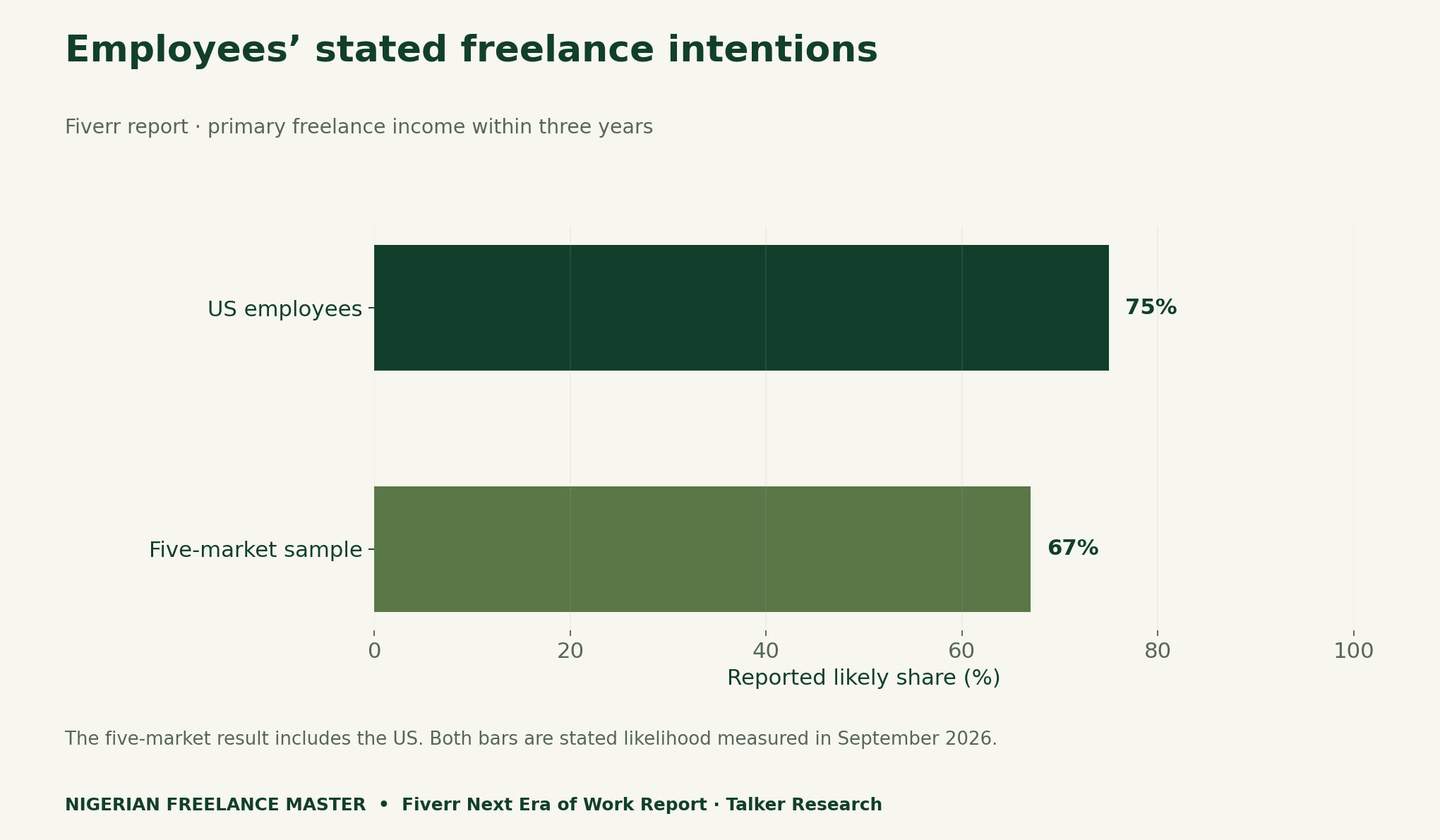
The Fiverr freelance survey 2026 found that 75% of surveyed US full-time employees considered it likely that freelance work would become their primary income within three years. The result describes answers given in September. It gives no follow-up count of people who actually made that transition.
The Next Era of Work report, published on 12 November, also gives 67% across the five participating markets. The Talker Research questionnaire shows the wording and response options for question 25. It asks respondents to rate the likelihood of making freelance work their main income in the next three years.
Fiverr freelance survey 2026 figures cover stated likelihood
The questionnaire offers five choices from very likely to very unlikely. Another question asks about interest in being your own boss. Treat interest and stated likelihood as different measures. A person can find freelancing appealing while lacking an immediate plan, a client base or a stable way to earn from it.
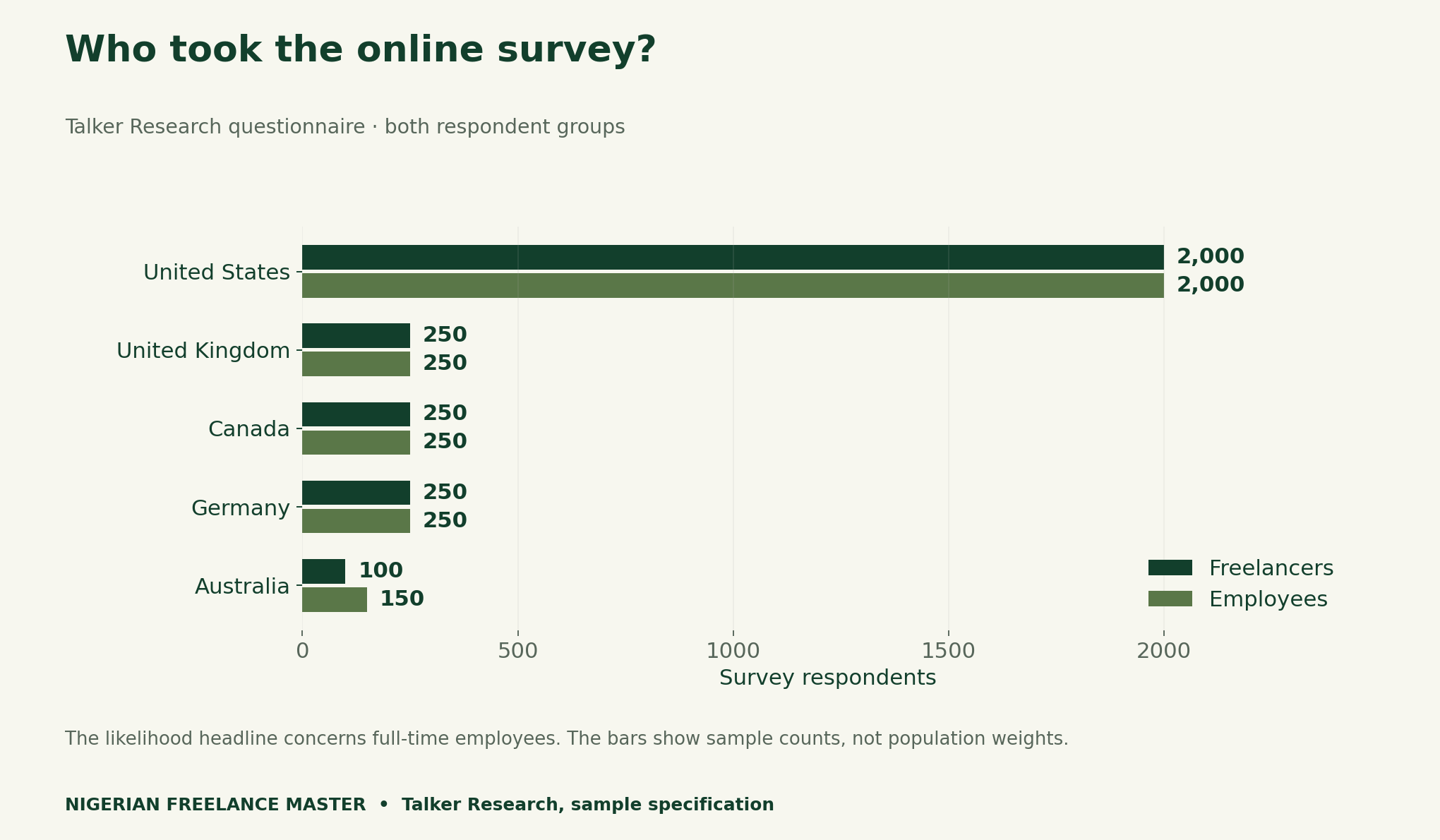
Talker Research ran the online survey from 21 to 29 September 2026 for Fiverr. It included the United States, UK, Canada, Germany and Australia. Nigeria did not participate. Because the samples differ in size, do not treat the combined number as the simple mean of five country percentages. The report’s five-market claim also cannot support an estimate for the Nigerian workforce.
Separate intention from a completed transition
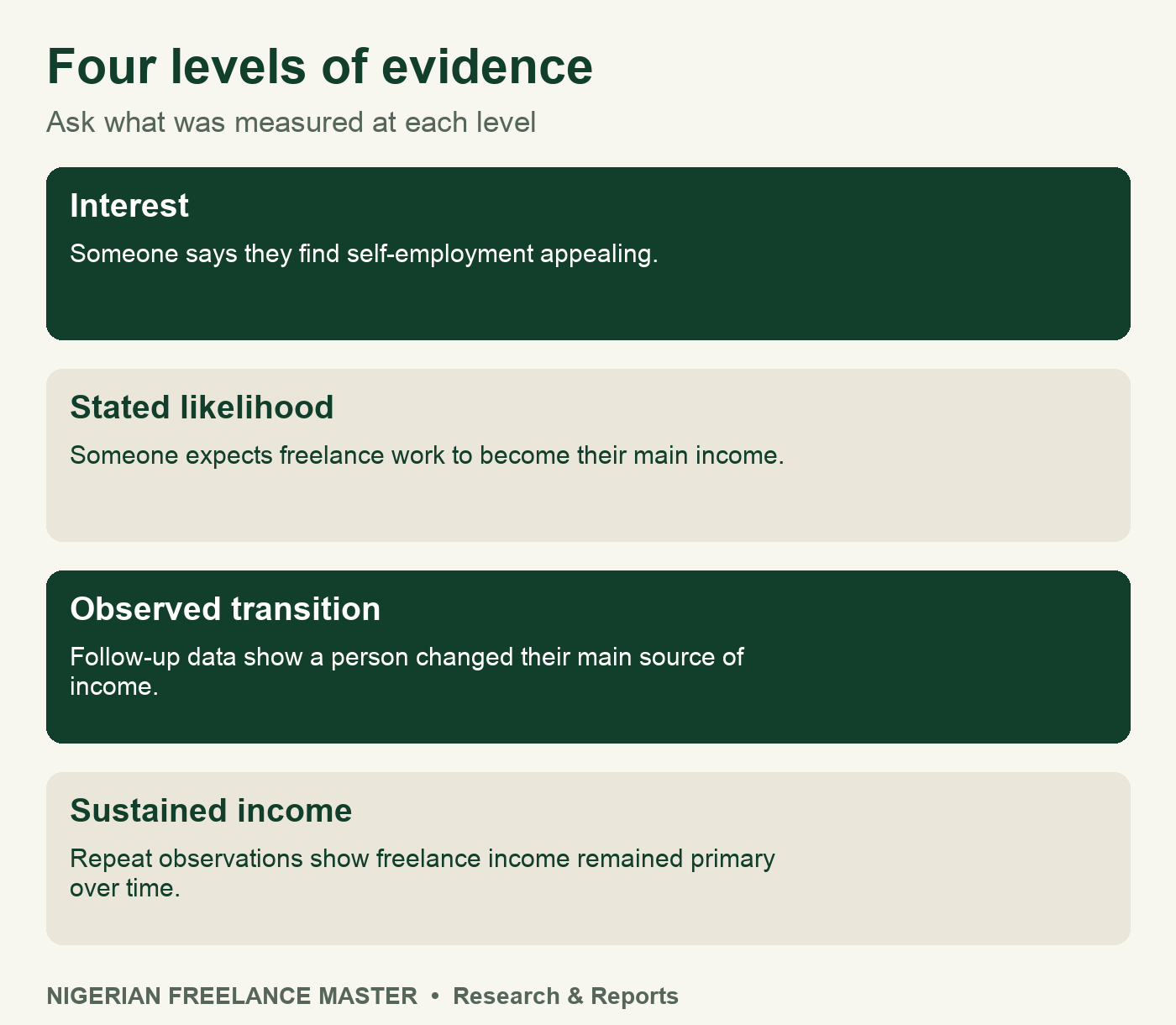
To estimate completed transitions, a follow-up would need a clear rule for primary income and a consistent observation window. For example, researchers might track work and income records from the same people a year later. They would also need to report who dropped out of the follow-up and whether that could change the result.
Sustained freelance income raises another question. One paid project proves someone completed paid work. Repeated income records over several periods provide a stronger basis for saying the income source remained primary. The 2026 survey gives an intention measure and cannot answer either outcome question.
Audit a claim before paying for training or changing careers
Write down the exact population, question, field dates and sponsor. Then check whether the reported number describes interest, likelihood or an outcome. For a Nigerian work decision, compare the survey claim with a live buyer need you can verify. Record the scope, eligibility and payment terms as separate evidence.
If a training seller uses the 75% figure, ask which actual roles or projects match the course. Then assess the course against your time and budget. Our Nigeria remote-job eligibility guide shows how to record opportunity evidence at listing level.
Sources and audit files
The source data use the report’s published percentages and the questionnaire’s sample counts. The evidence ladder and claim-audit template are original. Use the templates to assess the next claim before inferring a personal or market outcome.